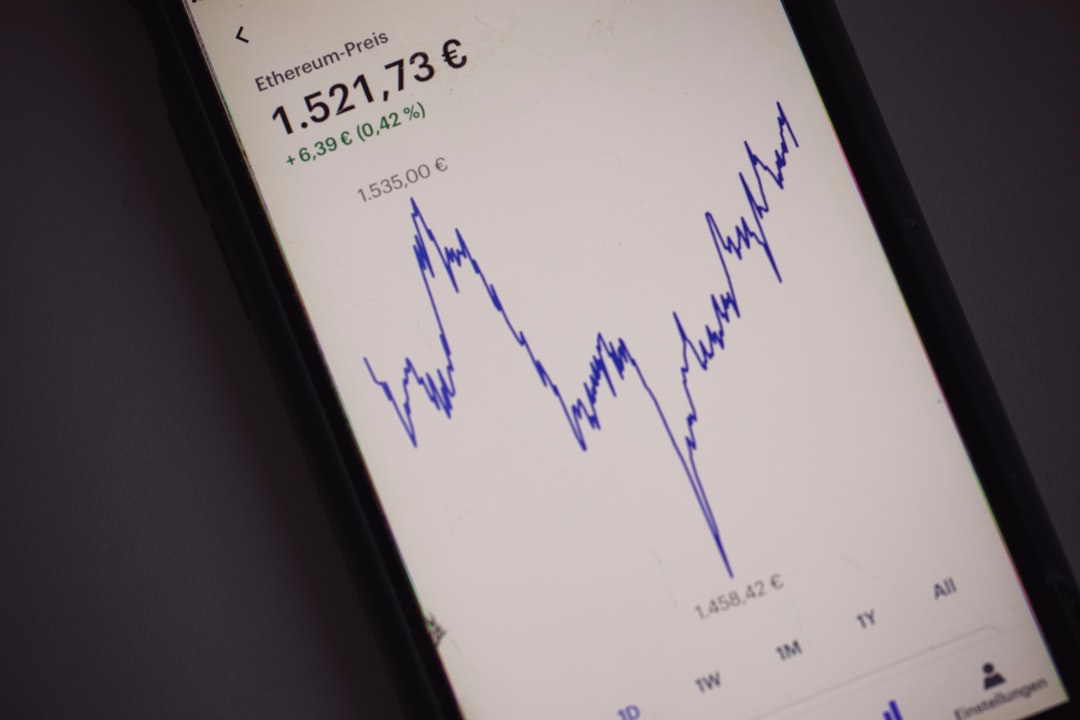
The stock market can feel like a roller coaster, right? One day it’s up, the next it’s down, and trying to make sense of it all can be overwhelming. But what if you could strategically ride those waves, turning market swings into profitable opportunities? That’s exactly what swing trading aims to do, offering a middle ground between the fast-paced world of day trading and the long-term patience of investing. In today’s dynamic market, understanding and implementing effective swing trading techniques can be a game-changer for your portfolio. Let’s dive in and unlock the potential of these powerful strategies! 😊
What Exactly is Swing Trading? 🤔
Swing trading is a popular strategy where traders hold positions for several days to a few weeks, aiming to profit from short-to-medium term price movements within an established trend or range. Unlike day trading, where positions are closed before the market closes, swing traders carry positions overnight and sometimes over weekends. This approach is ideal for those who can’t monitor the market constantly but still want to benefit from price movements.
The core idea is to identify a “swing low” to buy into an uptrend or a “swing high” to sell (or short) into a downtrend, and then exit the trade when the momentum begins to fade or reversal signals appear. This requires a clear understanding of price trends, momentum, and patterns.
Most swing trades typically last between 2-10 trading days, though some can extend to several weeks depending on the setup and market conditions. This flexibility makes it a viable option for many traders, including working professionals.
The Current Market Landscape for Swing Traders in 2026 📊
The year 2026 presents a unique environment for swing traders. We’re seeing a market influenced by several factors, including strong corporate earnings, particularly in the tech sector driven by AI development, and persistent inflation. The S&P 500 has even hit new all-time highs in April 2026 after a V-shaped recovery in Q1, showing remarkable resilience despite geopolitical conflicts and higher oil prices.
However, it’s not all smooth sailing. Market volatility is expected to remain high, with some analysts warning of potential corrections due to stretched valuations and concentrated gains in a few large stocks. This instability means that while opportunities exist, a structured approach to swing trading is more critical than ever. The “buy and hold for 3-5 days” approach of the 2020s is considered outdated; today’s edge comes from structure, not just stock picking.
Key Market Dynamics (May 2026)
| Factor | Impact on Swing Trading | Trend | Relevance |
|---|---|---|---|
| AI-driven Tech Growth | Fuels specific sector momentum, creating breakout opportunities. | Strong Uptrend | High (Magnificent 7 influence) |
| Market Volatility | Increases price swings, demanding agile strategies and risk management. | Elevated | Crucial (requires volatility-aware trading) |
| Inflation & Interest Rates | Can pressure growth stocks and affect overall market sentiment. | Sticky (around 3%) | Moderate (watch for Fed actions) |
| Geopolitical Events | Can create sudden market gaps and increased overnight risk. | Ongoing Impact | Significant (risk management is key) |
While the market has shown resilience, a significant breadth divergence exists, with only a few mega-cap stocks driving much of the S&P 500’s gains. This could precede larger-than-average drawdowns. Always be aware of the broader market health!
Core Swing Trading Strategies and Indicators 👩💼👨💻
Successful swing trading hinges on identifying reliable setups and using the right technical indicators to confirm your decisions. In 2026, several strategies remain highly effective. Let’s explore some of them:
- Mean Reversion to the 20 EMA: This is considered one of the most reliable strategies, especially in trending markets. The 20 Exponential Moving Average (EMA) acts as a natural magnet for stocks in a clear uptrend. You look to enter when the price pulls back to the 20 EMA and shows a reversal candle.
- Breakout From Multi-Week Consolidation: This involves identifying stocks that have been consolidating for at least 15 trading days with declining volume. A breakout candle closing above the range on high volume signals a potential entry.
- Fibonacci Retracement Entry: Fibonacci retracement levels (50% and 61.8% being most reliable) offer specific price points where swing traders often cluster entries. This works best for stocks with strong recent momentum experiencing orderly pullbacks.
- Momentum Strategy: A popular strategy where traders jump on a strong price move and stay in the trade until the momentum begins to fade. This is often confirmed by price breaking out of a key level, rising volume, or momentum indicators like RSI or MACD.
To effectively implement these strategies, you’ll need to master several key technical indicators. The best indicators for swing trading in 2026 include Moving Averages (MA, especially EMA), Relative Strength Index (RSI), MACD, Bollinger Bands, and Volume Indicators.
* Moving Averages (MA/EMA): Smooths price data to identify trends and dynamic support/resistance. The 20 EMA is crucial for mean reversion.
* Relative Strength Index (RSI): A momentum oscillator measuring the speed and change of price movements, identifying overbought/oversold conditions.
* MACD: A trend-following momentum indicator showing the relationship between two moving averages, useful for trend direction and reversals.
* Bollinger Bands: Measures volatility and indicates potential reversal points.
Risk Management: Your Shield in Swing Trading 🛡️
No matter how promising a trading strategy appears, effective risk management is the bedrock of consistent profitability. This is especially true in swing trading, where positions are held overnight and are exposed to market-moving news or events.
-
✅
The 1-2% Rule:
Never risk more than 1-2% of your total trading capital on a single trade. This rule is fundamental for preserving capital and is standard practice among professional traders. -
✅
Stop-Loss Orders are Non-Negotiable:
Always define your risk before entering a trade by setting clear stop-loss levels. These should be based on technical analysis (e.g., below a recent swing low or support level) to limit potential losses. Use market stop-loss orders to ensure execution. -
✅
Maintain a Favorable Risk-Reward Ratio:
Aim for a minimum risk-reward ratio of 1:2, meaning your potential profit should be at least twice the amount you’re risking. Many aggressive traders target 1:3 or higher.
Leveraging AI in Swing Trading 🤖
The rise of artificial intelligence (AI) is transforming the trading landscape, and swing traders can significantly benefit from these advancements in 2026. AI tools are no longer just for institutional players; they’re becoming accessible to retail traders, offering sophisticated analysis, pattern recognition, and even automated strategy building.
AI-powered platforms can help you scan thousands of instruments in real-time, detect complex chart patterns across multiple timeframes, and even generate trade signals. Tools like Trade Ideas (with Holly AI), Tickeron, and TrendSpider are leading the charge, automating tasks that would otherwise take hours of manual analysis. This allows traders to save time and focus on execution and risk management, rather than getting bogged down in endless chart analysis.
* Faster Market Scanning: Quickly identify potential trade setups.
* Advanced Pattern Recognition: Detect complex chart patterns that human eyes might miss.
* Automated Backtesting: Test strategies against historical data efficiently.
* Real-time Alerts: Receive signals for entry and exit points.
Practical Example: A Swing Trade Scenario 📚
Let’s walk through a hypothetical swing trade using the “Mean Reversion to the 20 EMA” strategy in a trending market.
Trader Jane’s Situation
- Stock: TechInnovate (TI) – clearly in an uptrend on the weekly chart.
- Analysis: Jane uses an AI scanning tool that identifies TI pulling back towards its 20 EMA on the daily chart, showing a strong bullish engulfing candle forming right at the EMA.
- Risk Tolerance: Jane adheres to the 1% rule, risking $100 per trade on her $10,000 portfolio.
Execution Process
1) Entry: Jane buys 100 shares of TI at $50 (close of the bullish reversal candle), based on the 20 EMA mean reversion strategy. Total investment: $5,000.
2) Stop-Loss: She places a stop-loss order at $49 (below the low of the reversal candle and the 20 EMA), risking $1 per share, or $100 total (1% of her portfolio).
3) Target: Her first profit target is the most recent swing high at $53, aiming for a $3 profit per share. This gives her a 1:3 risk-reward ratio.
Final Result
– Outcome: Over the next few days, TI continues its uptrend, hitting Jane’s target of $53. She sells her 100 shares for $5,300.
– Profit: Jane makes a profit of $300 ($5,300 – $5,000), successfully executing a swing trade with a favorable risk-reward. She then trails her stop to breakeven after the first target is hit to protect profits.
This example highlights how combining a clear strategy, disciplined risk management, and confirmation from technical analysis (potentially augmented by AI) can lead to profitable outcomes in swing trading. Remember, consistency over many trades is key, not just individual wins.
Conclusion: Your Path to Swing Trading Success 📝
Swing trading in 2026 offers compelling opportunities for those willing to learn, adapt, and apply disciplined strategies. The market’s current volatility, combined with the power of AI tools, creates an exciting environment for capturing short-to-medium term gains. Remember, success isn’t about predicting every move, but about having a robust process, managing your risk diligently, and continuously refining your approach.
By focusing on proven strategies, leveraging the latest AI technology, and always prioritizing risk management, you can build a profitable edge in the stock market. What are your thoughts on swing trading in today’s market? Share your experiences and questions in the comments below! 😊