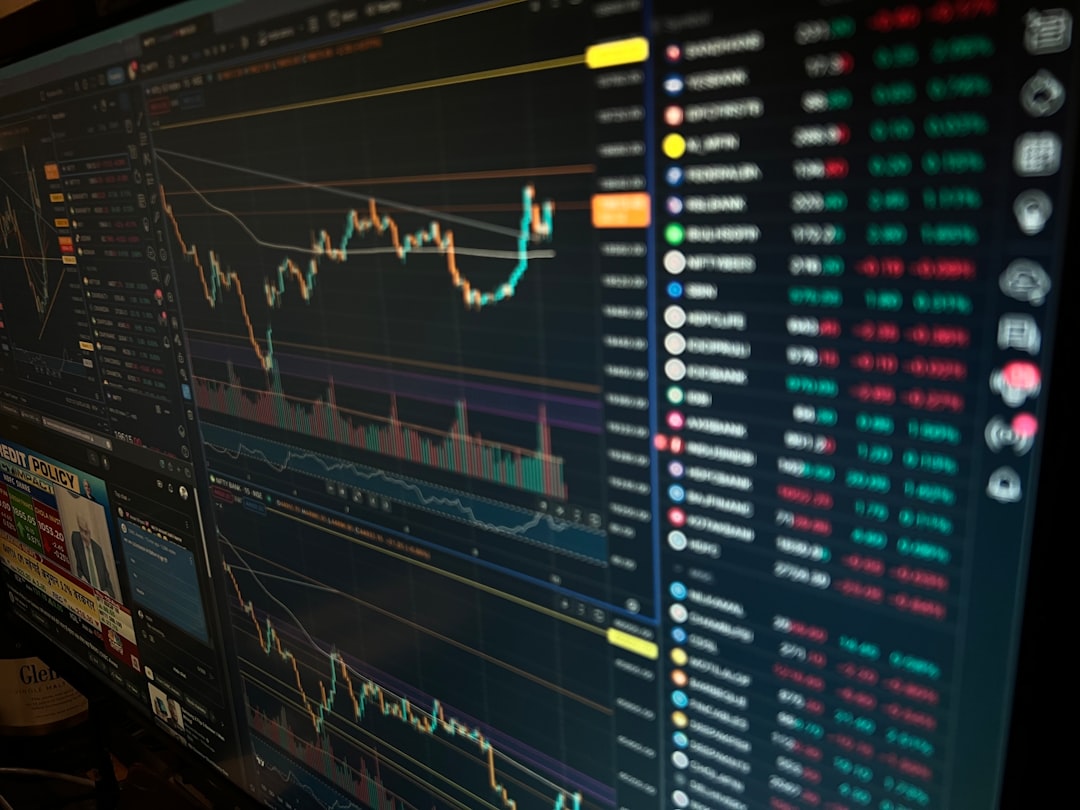
Have you ever felt caught between the fast-paced world of day trading and the slow burn of long-term investing? Many aspiring traders find themselves in this very spot, seeking a strategy that offers both excitement and realistic time commitments. If that sounds like you, then swing trading might just be your sweet spot! It’s a powerful approach that allows you to ride market “swings” over several days or weeks, aiming for substantial gains without the constant screen time. Let’s dive in and unlock the potential of swing trading together! 😊
What Exactly is Swing Trading? 🤔
Swing trading is a popular active trading style that focuses on capturing short-to-medium-term price movements within financial markets. Unlike day traders who close all positions by the end of the trading day, swing traders typically hold their positions for a few days to several weeks. This allows them to capitalize on price “swings” or oscillations that occur as prices fluctuate within a larger trend or range.
The core idea is simple: stocks don’t move in straight lines. They trend in waves—up, consolidate, up again, or down, bounce, down again. Swing traders aim to catch one of these directional waves and exit before the next major reversal. This approach makes it appealing for individuals with full-time jobs or busy schedules, as it doesn’t demand constant monitoring like day trading.
In 2026, more traders are leaning towards swing trading due to its flexibility and the ability to capture larger moves (10-50% gains during strong impulsive waves) compared to day trading. It also significantly reduces the “noise” of intraday charts by focusing on 4-hour and daily charts for a clearer market picture.
Current Market Trends and Insights for 2026 📊
The financial markets in 2026 are characterized by heightened sensitivity to economic headlines, persistent interest rate expectations, and the ongoing influence of geopolitical events and energy prices. While some investors might perceive 2026 as volatile, the annualized volatility for US stocks through April 10, 2026, registered at 15%, which is about average historically. However, experts anticipate increased volatility from September through November 2026, making careful strategy essential.
A significant trend influencing markets is the AI infrastructure boom. Sectors with strong institutional flows, such as AI stocks, semiconductor stocks, clean energy stocks, and high-growth tech stocks, are key areas for swing traders to focus on. Companies like Nvidia (NVDA), Arm Holdings (ARM), Tesla (TSLA), Microsoft (MSFT), Apple (AAPL), Amazon (AMZN), and Meta (META) are frequently cited as top picks for swing trading due to their volatility, liquidity, and clear chart patterns.
Swing Trading vs. Other Strategies: A 2026 Comparison
| Factor | Swing Trading | Day Trading | Buy-and-Hold Investing |
|---|---|---|---|
| Holding Period | 2 days to several weeks | Minutes to hours (same day) | Months to years |
| Time per Day | 30–60 min (pre/post market) | 4–8 hours at screen | Minutes per week |
| Stress Level | Moderate | Very High | Low |
| Capital Required | $2,000–$5,000+ | $25,000+ (Pattern Day Trader Rule) | Any amount |
Swing trading in 2026 is heavily influenced by algorithmic players, event-driven volatility, and fragmented momentum. The “buy and hold for 3-5 days” approach of earlier years is evolving. Success now comes from structured frameworks rather than just stock picking. Always remember that low risk doesn’t mean no risk, and high reward isn’t guaranteed profit.
Key Checkpoints: Remember These Essentials! 📌
You’ve made it this far! With all the information, it’s easy to forget the most crucial points. Let’s recap the three absolute must-remembers from our discussion so far:
-
✅
Swing Trading is a Middle Ground:
It’s ideal for capturing multi-day price movements without the intensity of day trading or the long waits of investing. -
✅
Current Market Favors Structured Approaches:
Algorithmic trading and event-driven volatility mean a rigid “buy and hold for a few days” is less effective; a systematic framework is key. -
✅
Focus on AI, Semiconductors, and Clean Energy:
These sectors show strong institutional flows and frequent opportunities for swing traders in 2026.
Essential Strategies for Successful Swing Trading 👩💼👨💻
Effective swing trading relies heavily on a combination of technical analysis, stringent risk management, and emotional discipline. Here are some strategies and principles crucial for success in 2026:
- Technical Analysis is Your Compass: Swing traders primarily use daily and 4-hour charts to identify setups. Key indicators include:
- Moving Averages (e.g., 50-day MA, 9/21 EMA): These help confirm trends and identify potential entry/exit points. For instance, trading on the long side when the stock is above its 50-day MA indicates an uptrend.
- Relative Strength Index (RSI): An RSI between 40 and 60 suggests a healthy mid-trend state, avoiding overbought (above 70) or oversold (below 30) conditions.
- Fibonacci Retracements: Used to identify potential reversal zones like support and resistance. Common levels are 38.2%, 50%, and 61.8%.
- Risk Management is Non-Negotiable: This is the foundation of successful swing trading.
- The 1%-2% Rule: Risk no more than 1%-2% of your trading capital on a single trade to minimize losses.
- Stop-Loss Orders: Pre-define your exit point for a trade to limit potential losses. These are essential for capital preservation.
- Position Sizing: Determine how much capital to allocate to each trade based on your stop-loss distance and overall risk tolerance.
- Risk-Reward Ratio: Aim for a minimum 1:3 risk-reward ratio (e.g., for every 1% risk, target 3% potential reward).
- Identify Key Setups: Some reliable swing trading strategies in 2026 include:
- Breakout from Consolidation: Look for stocks consolidating for at least 15 trading days with declining volume, then breaking out on high volume.
- Earnings Gap & Go: Capitalize on stocks that gap up on earnings news, consolidate, and then continue higher.
- Fibonacci Retracement Entry: Buying when prices pull back to significant Fibonacci levels (e.g., 61.8% or 76.4%) in anticipation of a bounce.
- Moving Average Crossover: Confirming trend changes when shorter-term moving averages cross above longer-term ones.
The market is becoming increasingly influenced by AI and algorithmic trading. Consider integrating AI tools for pre-trade analysis (finding and validating opportunities) and post-trade tracking and review to increase efficiency and reduce time spent.
Real-World Example: A Swing Trade in Action 📚
Let’s consider a hypothetical swing trade scenario based on a common strategy, like a “Breakout from Consolidation,” in the current market environment. Imagine it’s early 2026, and you’re eyeing a semiconductor stock.
Scenario: “TechCo Semiconductor (TCS)”
- Observation: TCS, a leading semiconductor firm, has been consolidating in a tight range between $150 and $155 for the past 18 trading days, with decreasing volume. This indicates a potential energy build-up before a significant move.
- Market Context: The broader semiconductor sector is showing renewed strength, driven by increased AI-related capital expenditure.
Trade Execution Steps
1) Entry Signal: On August 15, 2026, TCS breaks above $155, closing at $158 on volume 70% higher than its 20-day average. This confirms a breakout from consolidation.
2) Entry: You enter a long position at the open the next day, August 16, 2026, at $158.50 per share.
3) Stop-Loss: You place a stop-loss order just below the breakout level, at $154.50 (risking $4 per share). This adheres to your 1% risk rule, meaning if your capital is $10,000, you risk $100, so you can buy 25 shares ($100 / $4).
4) Target: Based on previous resistance and a 1:3 risk-reward ratio, your target is $170.50 ($158.50 + ($4 x 3)).
Final Result (Hypothetical)
– Outcome: Over the next 7 trading days, TCS continues its upward momentum, reaching $171 on August 25, 2026.
– Profit: You exit at $171, securing a profit of $12.50 per share ($171 – $158.50). For 25 shares, this is a $312.50 gain, well exceeding your 1:3 risk-reward target.
This example illustrates how a disciplined approach, combined with identifying clear technical patterns and adhering to risk management rules, can lead to profitable swing trades. Remember, consistency in applying your strategy is far more important than chasing every single market move.
Wrapping Up: Key Takeaways 📝
Swing trading offers a compelling path to potentially significant returns for those who are willing to learn and apply disciplined strategies. In today’s dynamic markets, staying informed about trends like the AI boom and understanding market volatility is more crucial than ever. By focusing on robust technical analysis, strict risk management, and continuous learning, you can navigate the swings and work towards consistent profitability. Remember, the market is a teacher, and every trade is a lesson!
What are your thoughts on swing trading in the current market? Do you have any favorite strategies or tips to share? Let us know in the comments below! 😊
Swing Trading Essentials
Frequently Asked Questions ❓
Copyright © 2025 QHost365.com ®