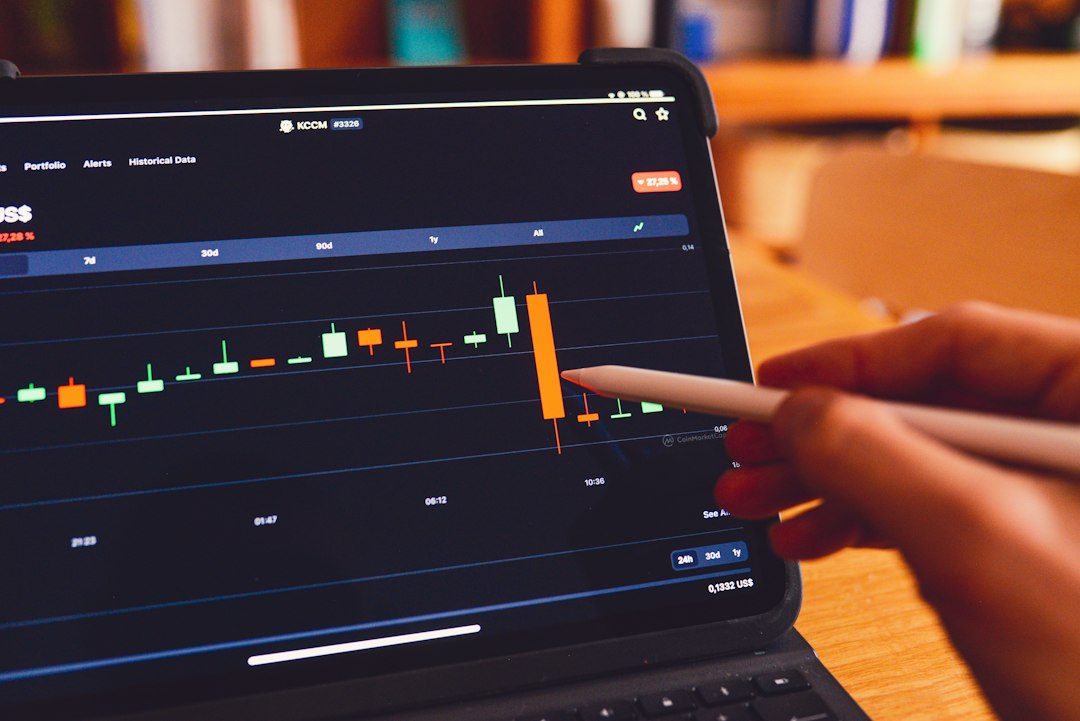
Many of us dream of making money in the stock market, watching our investments grow. While long-term investing is a tried-and-true path, some seek more dynamic opportunities to generate returns. If you’re looking to capitalize on market movements without the intensity of day trading, then swing trading might just be your sweet spot! It’s a powerful method to profit from market swings, and today, we’re diving deep into how you can master it. Ready to explore a practical and exciting approach to stock trading? Let’s dive in! 😊
What Exactly is Swing Trading? 🤔
At its core, swing trading is a strategy where traders aim to profit from short-to-medium term price movements or “swings” in a stock’s price. Unlike day traders who open and close positions within the same trading day, swing traders typically hold their positions for a few days to several weeks. This approach allows them to capture a larger portion of a trend, or a “swing,” in the market, without the constant monitoring required by day trading.
The goal is to identify stocks that are likely to move significantly in a specific direction and then enter a trade to capture that move. It’s about riding the waves, not getting caught in the daily chop. This method strikes a balance, offering more flexibility than day trading while still providing opportunities for quicker gains compared to long-term investing.
Swing trading bridges the gap between day trading and long-term investing. It typically involves holding positions for 2-6 days, though it can extend up to a few weeks. It requires less time commitment than day trading but more active management than buy-and-hold strategies.
The Current Landscape: Why Swing Trading Thrives Today 📊
The financial markets are constantly evolving, and recent years have brought a unique blend of volatility and opportunity. Global economic shifts, rapid technological advancements, and a 24/7 news cycle contribute to frequent price swings, creating an ideal environment for swing traders. Analysts note that increased market liquidity and the rapid news cycle in recent years have amplified short-term price movements, making strategies like swing trading increasingly relevant for capturing quick gains.
This dynamic environment means that specific sectors, particularly those in technology, renewable energy, and biotech, often experience periods of rapid growth followed by consolidation, offering clear entry and exit points for discerning traders. The current market environment, characterized by rapid technological advancements and fluctuating interest rates, often presents clear trends and reversals ideal for swing traders.
Comparing Trading Strategies
| Category | Day Trading | Swing Trading | Long-Term Investing |
|---|---|---|---|
| Time Horizon | Minutes/Hours | Days/Weeks | Months/Years |
| Risk Level | High | Medium | Low-Medium |
| Time Commitment | Very High | Moderate | Low |
| Primary Focus | Intraday Volatility | Short-term Trends | Fundamental Growth |
While enticing, swing trading involves significant risk. Market sentiment can shift rapidly, and unexpected news can lead to substantial losses. Always employ strict risk management and never trade with money you cannot afford to lose.
Key Checkpoints: What to Remember for Swing Trading! 📌
You’ve made it this far! With a lot of information to absorb, it’s easy to forget the most crucial points. Let’s recap the three most important takeaways. Be sure to keep these in mind:
-
✅
Focus on Short-to-Medium Term Moves
Swing trading is all about capturing price movements over days or weeks, differentiating it from intraday trading or long-term investing. -
✅
Technical Analysis is Your Best Friend
A deep understanding of charts, patterns, and indicators is crucial for identifying potential entry and exit points. -
✅
Prioritize Risk Management
Always define your stop-loss and profit targets before entering a trade to protect your capital and ensure disciplined trading.
Building Your Arsenal: Key Swing Trading Strategies 👩💼👨💻
Successful swing trading isn’t just about luck; it’s about employing robust strategies backed by sound analysis. Technical analysis forms the backbone of most swing trading strategies, helping you read the market’s pulse and predict potential price movements.
Key tools include candlestick patterns (like hammer, doji, engulfing patterns), moving averages (to identify trends), and momentum indicators such as the Relative Strength Index (RSI) and Moving Average Convergence Divergence (MACD). These tools help identify oversold/overbought conditions, trend reversals, and continuation patterns. While technicals are primary, a quick glance at fundamental news can help avoid trades against major company developments.

A robust trading plan is your blueprint for success. It should detail your entry and exit criteria, position sizing, risk per trade, and psychological rules. Never trade without one, and always stick to your predetermined stop-loss orders.
Real-World Example: The “Bull Flag” Breakout 📚
Let’s walk through a common swing trading scenario: identifying and trading a “bull flag” pattern. This pattern signals a temporary pause in a strong uptrend, often preceding a continuation of the upward movement. It’s a favorite among swing traders for its clear entry and exit signals.
Scenario: Spotting Opportunity in Stock ABC
- Information 1: Stock ABC, a leading tech innovator, has experienced a strong upward surge, moving from $90 to $105 in a week. This forms the “flagpole.”
- Information 2: Following this surge, the stock consolidates, trading sideways or slightly downwards within a narrow channel, forming a “flag” pattern on lower trading volume. This indicates a temporary breather before the next move.
Calculation & Execution Process
1) Identify the Pattern: A trader spots Stock ABC forming a clear bullish flag pattern after a significant upward move. The consolidation phase suggests buyers are gathering strength for another push.
2) Define Entry Point: The trader sets a buy order just above the upper resistance line of the flag pattern, for example, at $106, anticipating a breakout.
3) Set Stop-Loss: To manage risk, a stop-loss order is placed just below the lowest point of the flag’s consolidation, perhaps at $99. This limits potential losses if the pattern fails.
4) Determine Profit Target: The profit target is typically measured by projecting the length of the “flagpole” from the breakout point. If the flagpole was $15 ($105 – $90), the target could be $106 + $15 = $121.
Final Result
– Entry Price: $106
– Stop-Loss: $99
– Profit Target: $121
– Outcome: Stock ABC breaks out, rallies to $121, and the trader exits for a profitable gain of $15 per share (14.15% return on the trade). This showcases disciplined execution and successful pattern recognition.
This example underscores the importance of identifying reliable chart patterns and strictly adhering to your predefined entry, stop-loss, and profit target levels. While not every trade will be a winner, a disciplined approach significantly increases your chances of long-term profitability.
Conclusion: Your Journey to Confident Swing Trading 📝
Swing trading offers an exciting and potentially lucrative way to participate in the stock market. By understanding market dynamics, mastering technical analysis, and implementing strict risk management, you can position yourself to capture significant profits from short-to-medium term price movements. Remember, consistency and discipline are your greatest allies in this journey.
The market is always evolving, so continuous learning and adapting your strategies are key to long-term success. Don’t be afraid to start small, learn from your experiences, and refine your approach. What are your thoughts on swing trading? Do you have a favorite strategy or a question you’d like to share? Let us know in the comments below! We’d love to hear from you. 😊