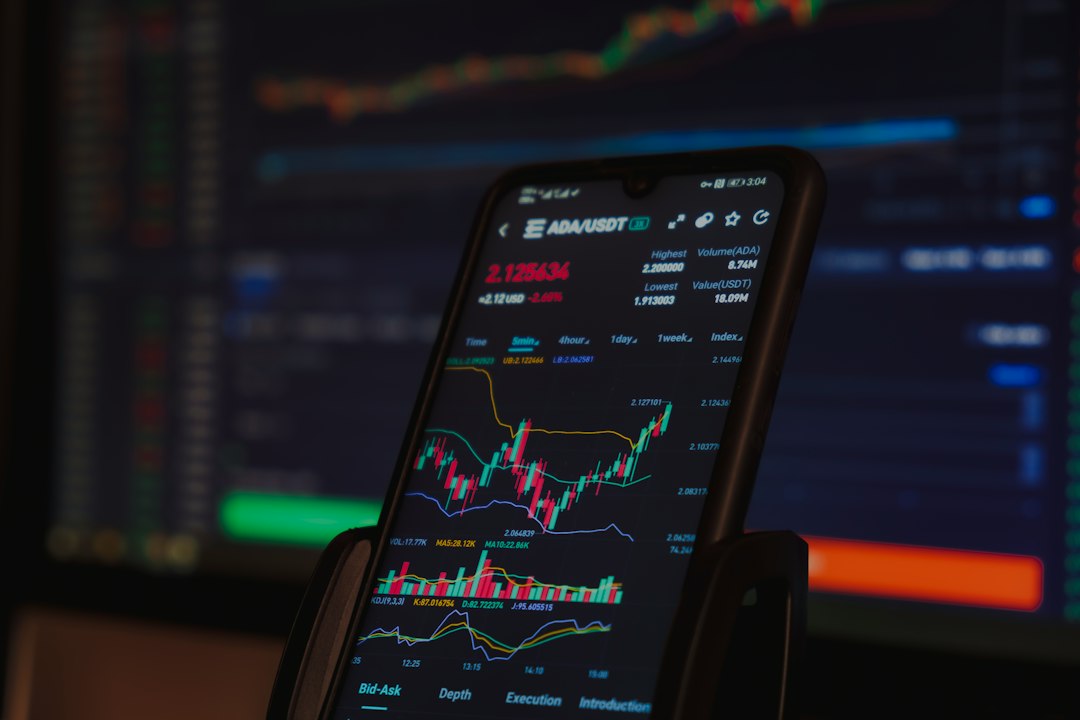
Have you ever felt like you’re constantly fighting the market, only to see it move in a clear direction right after you exit a trade? It’s a common frustration for many Forex traders, and honestly, I’ve been there too! The good news is, there’s a powerful and time-tested approach that helps you align with the market’s natural flow: Trend Following. In the ever-evolving landscape of 2026, where AI and algorithms dominate, understanding and implementing a robust trend-following strategy is more crucial than ever. This guide will walk you through everything you need to know to leverage this technique and potentially turn market momentum into profit. Let’s dive in! 😊
The Enduring Power of Trend Following in FX 🤔
Trend following is one of the oldest and most reliable trading methods in Forex. The core idea is incredibly simple: identify the direction the market is moving and trade with it, not against it. Why? Because markets spend a significant portion of their time moving in sustained trends, and aligning your trades with these flows significantly increases your probability of success.
In 2026, the Forex market is more dynamic than ever. Global OTC foreign exchange turnover averaged an astounding $9.6 trillion per day in April 2025, a 28% increase from 2022, and is projected to reach $9.8 trillion daily by the end of 2026. This massive liquidity, coupled with the increasing dominance of AI and algorithmic trading (influencing over 80% of trades in 2026), means that institutional flows often create longer, cleaner trends. As retail traders, our goal is to identify these institutional footprints and ride the wave.
The global retail Forex trading population grew by a 17.5% Compound Annual Growth Rate (CAGR) between 2022 and 2026, now exceeding 13.9 million active traders worldwide. This growth highlights the increasing accessibility and appeal of Forex trading to a broader audience.
Essential Tools: Key Indicators for Trend Following 📊
To effectively follow a trend, you need reliable tools to help identify its presence, strength, and potential reversals. In 2026, while AI-assisted tools are becoming more prevalent, classic technical indicators remain indispensable for filtering market noise and providing clear signals.
It’s crucial to understand that no single indicator is perfect. Most experienced traders combine two to four indicators that complement each other to reduce conflicting signals and avoid “analysis paralysis.”
Top Trend Following Indicators for 2026
| Indicator | Description | Key Use in Trend Following | 2026 Insight |
|---|---|---|---|
| Moving Averages (MA/EMA) | Smooths price data to reveal direction over a set period. EMAs give more weight to recent prices. | Identifies trend direction and dynamic support/resistance. A rising MA suggests an uptrend. | Often used in combination (e.g., 20/50/200 EMA) for multi-timeframe analysis. |
| MACD (Moving Average Convergence Divergence) | Tracks the relationship between two EMAs to signal momentum shifts. | Confirms trend momentum and potential reversals when crossing the signal line or zero line. | Still a staple for identifying momentum changes within an established trend. |
| RSI (Relative Strength Index) | A momentum oscillator (0-100) that tracks recent gains versus losses to indicate overbought/oversold conditions. | Helps prevent entering during overextended moves. Can stay elevated in strong trends. | Useful for spotting divergence from price action, signaling potential weakness. |
| ADX (Average Directional Index) | Measures trend strength, not direction. Values above 20-25 suggest a robust trend. | Filters weak trends and helps confirm if a trend has sufficient strength to continue. | Often combined with MAs to provide both direction and strength context. |

While indicators are powerful, they are lagging tools, meaning they react to past price data. Never use them in isolation. Always combine them with price action analysis and a solid understanding of market structure for better confirmation.
Key Checkpoints: What to Remember! 📌
Have you been following along? With all this information, it’s easy to forget some details. Let’s recap the most crucial points. Please keep these three things in mind:
-
✅
Trend Following is a Proven Strategy
This strategy aligns with the market’s natural tendency to move in sustained directions, offering a reliable framework for profit. -
✅
Utilize Complementary Indicators
Combine 2-4 indicators like EMAs, MACD, and ADX to confirm trends and momentum, avoiding over-reliance on a single tool. -
✅
Risk Management is Non-Negotiable
Disciplined position sizing, stop-loss orders, and a favorable risk-to-reward ratio are critical for long-term success.
Developing Your Trend Following Strategy 👩💼👨💻
A successful trend-following strategy isn’t just about identifying trends; it’s about how you enter, manage, and exit your trades. Risk management is the absolute cornerstone, as trend followers often absorb frequent small losses before catching a large, profitable trend.
- Entry Points: Trend followers typically enter on pullbacks to key levels (e.g., moving averages or previous support/resistance) within an established trend, rather than chasing price. Confirmation from candlestick patterns or momentum indicators can further validate entries.
- Stop-Loss Orders: These are critical for defining your maximum loss per trade. Stop losses should be placed based on market structure (e.g., below a swing low in an uptrend), not arbitrary pip distances.
- Take-Profit Orders: While some trend followers prefer to let profits run, others use strategic take-profit levels or trailing stops to lock in gains as the trend progresses.
- Position Sizing: This is arguably the most important aspect of risk management. A common rule is to risk no more than 1-2% of your total trading capital on any single trade. Your position size should be calculated based on your stop-loss distance to ensure this risk percentage is maintained.
- Risk-to-Reward Ratio: Always aim for a favorable risk-to-reward ratio, typically 1:2 or higher. This means you aim to make at least twice as much as you risk on a trade.
Mobile trading is a game-changer in 2026, accounting for 65% of all retail Forex trades. Ensure your chosen broker offers robust mobile platforms that allow you to manage your trend-following trades on the go!
Real-World Example: A Trend Following Scenario 📚
Let’s illustrate a hypothetical trend-following trade using a major currency pair, EUR/USD, which was the most dominant pair in April 2025, contributing 21.2% of overall daily turnover.
Trader’s Situation (October 2026)
- Currency Pair: EUR/USD
- Timeframe: H4 (4-hour chart)
- Account Capital: $10,000
- Risk Per Trade: 1% ($100)
- Observation: EUR/USD is in a clear uptrend, with price consistently above the 50-period EMA, and the MACD showing bullish momentum. ADX is above 25, confirming trend strength.
Trade Execution Process
1) Entry: Price pulls back to the 50-period EMA at 1.0850, forming a bullish engulfing candlestick pattern. The trader enters a long position.
2) Stop Loss: Placed below the recent swing low and the 200-period EMA at 1.0820 (30 pips risk).
3) Position Size Calculation: With a $100 risk and a 30-pip stop loss, the trader calculates the appropriate lot size to risk exactly $100. (For EUR/USD, 1 standard lot = $10 per pip. So, a 0.33 lot size would risk approx. $100 for 30 pips).
4) Take Profit: Set at 1.0910, aiming for a 1:2 risk-to-reward ratio (60 pips profit).
Final Result
– The trend continues, and EUR/USD hits the take-profit target.
– Profit: $200 (2% gain on the account, achieving the 1:2 risk-to-reward ratio).
This example demonstrates how combining trend identification with strict risk management and clear entry/exit rules can lead to profitable outcomes. Remember, consistency in applying your strategy is far more important than any single trade’s outcome.
Wrapping Up: Key Takeaways 📝
We’ve covered a lot about the Trend Following strategy in the Forex market. It’s clear that in 2026, with its technological advancements and increased market participation, sticking to proven strategies backed by robust risk management is paramount for success.
By understanding how to identify strong trends, utilizing the right combination of indicators, and diligently managing your risk, you can position yourself to capitalize on the market’s momentum. Remember, Forex success in 2026 is about data-driven decisions, AI assistance, institutional logic, and strict risk control. Keep learning, stay disciplined, and always prioritize protecting your capital. If you have any questions or want to share your own trend-following experiences, please leave a comment below! 😊