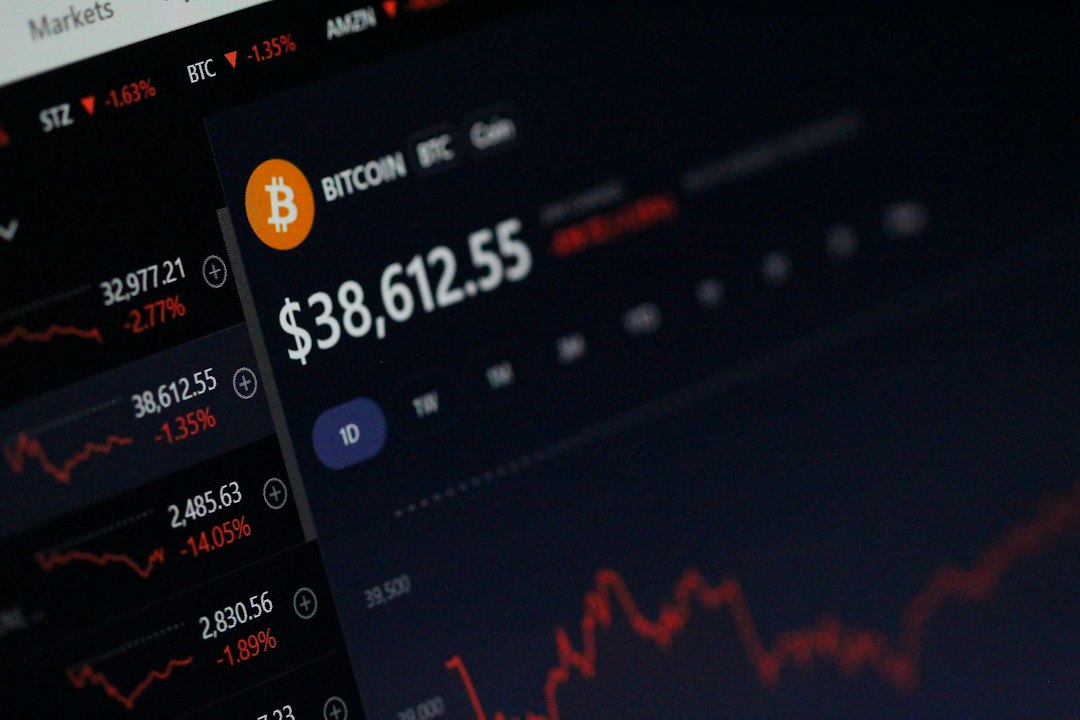
Have you ever felt like you’re missing out on market opportunities, but don’t have the time to sit in front of a screen all day? Or perhaps you’re tired of the “buy and hold” approach feeling a little… slow in today’s fast-paced markets? I totally get it! The financial world in 2026 is moving faster than ever, with new trends and challenges emerging constantly. That’s where swing trading comes in, offering a compelling balance between opportunity and practicality for capturing those sweet, multi-day price movements. Let’s dive in and discover how you can leverage this powerful strategy to potentially grow your wealth! 😊
What Exactly is Swing Trading? 🤔
Swing trading is a popular strategy where traders hold positions for several days to a few weeks, aiming to profit from short to medium-term price “swings” or fluctuations within a trend. Unlike day trading, which requires closing all positions before the market closes, swing traders carry positions overnight and sometimes over weekends. This flexibility means you don’t need to be glued to your screen all day, often spending just 30 to 60 minutes daily on analysis.
In 2026, the global markets are characterized by elevated interest rates, cooled but uneven inflation, and shifting central bank guidance, creating an environment of uncertainty and volatility. This dynamic makes swing trading particularly well-suited, as it allows traders to capitalize on these faster, more defined market cycles and capture significant moves, sometimes 10%, 20%, or even 50% during a strong impulsive wave.
Swing trading can be a great option for those with smaller accounts, as it doesn’t fall under the Pattern Day Trader (PDT) rule in the U.S., which requires a minimum of $25,000 for day trading.
2026 Market Trends & Opportunities for Swing Traders 📊
The 2026 market is influenced by algorithmic players, event-driven volatility, and fragmented momentum. The “buy and hold for 3-5 days” approach of the early 2020s is considered outdated. Today, the edge comes from understanding market structure rather than just stock picking. Traders should focus on sectors with strong institutional flows, such as AI stocks, semiconductor stocks, clean energy stocks, and high-growth tech stocks.
The shift to T+1 settlement in the U.S. also plays a role, impacting how quickly trades are settled. Successful swing trading in this environment demands adaptability and a systematic approach to identify setups with favorable risk-reward profiles in real-time.
Swing Trading vs. Other Strategies (2026 Outlook)
| Category | Swing Trading | Day Trading | Long-Term Investing |
|---|---|---|---|
| Holding Period | Days to a few weeks | Intraday (positions closed daily) | Months to years |
| Time Commitment | 30-60 mins/day analysis | Full-time screen monitoring | Periodic reviews |
| Risk Profile | Moderate (overnight risk) | High (intraday volatility) | Low to Moderate (market cycles) |
| Capital Requirement | Lower (no PDT rule for US) | High ($25k for PDT in US) | Varies |
While swing trading offers great potential, it’s not without risks. Overnight gaps, emotional decisions, and poor risk management can still lead to significant losses. Always start smaller than you think you need to and prioritize discipline over speed.
Key Checkpoints: Don’t Forget These! 📌
You’ve come this far, great job! With all this information, it’s easy to forget the most crucial points. So, let’s recap the top three things you absolutely need to remember.
-
✅
Understand the 2026 Market Dynamics
Today’s market is driven by algorithms, event-driven volatility, and sector rotation. Your edge comes from structured strategies, not just stock picking. -
✅
Focus on High-Growth Sectors
AI, semiconductors, clean energy, and high-growth tech are seeing strong institutional flows, offering prime opportunities for swing trades. -
✅
Prioritize Risk Management
Always aim for a minimum 1:3 risk-reward ratio and set strict daily loss limits to protect your capital. Discipline is paramount.
Mastering Swing Trading Techniques & Tools 👩💼👨💻
Effective swing trading relies heavily on technical analysis and understanding key indicators. Some of the most reliable strategies in 2026 involve identifying breakouts from consolidation, utilizing Fibonacci retracements, and trading mean reversion to key moving averages.
Popular technical indicators for swing traders include the 20-day Exponential Moving Average (EMA), 50-day Simple Moving Average (SMA), 200-day Moving Average, Relative Strength Index (RSI), and various candlestick patterns like hammers or bullish engulfing.

Tracking each strategy separately is crucial. By analyzing 30-40 trades per setup, you can identify which specific strategies have a positive expectancy for your unique execution style and adapt to changing market conditions.
Real-World Example: A 20 EMA Reversion Trade 📚
Let’s walk through a hypothetical swing trade using the “20 EMA Reversion” strategy, which is often reliable in trending stocks.
Trader’s Situation (October 2026)
- **Stock:** A high-growth tech stock (e.g., in the AI sector) in a clear daily and weekly uptrend.
- **Conditions:** The broader market health indicators are favorable for long trades.
Execution Process
1) **Entry Criteria Check:** The stock is trading above its 200 EMA on the daily chart. Price has pulled back to within 2% of its 20 EMA. The RSI is between 40-55, indicating it’s not overbought. Volume is at least 150% of its 20-day average, confirming institutional interest.
2) **Entry:** The trader places a buy order as the stock shows signs of bouncing off the 20 EMA, often with a bullish candlestick pattern. For instance, if the stock is trading at $100, the entry might be at $100.50.
3) **Risk Management:** A stop-loss is set below a recent swing low or a key support level, ensuring a minimum 1:3 risk-reward ratio. For example, if the stop-loss is at $98.50 (2% risk), the target would be at least $106.50 (6% reward).
Final Outcome
– **Result:** Over the next 3-5 trading days, the stock resumes its uptrend, reaching the target price of $106.50.
– **Learning:** This trade exemplifies how a systematic approach, combined with proper risk management and adherence to specific entry/exit rules, can yield profitable results in a trending market.
This example highlights the importance of having a clear framework and executing it mechanically. Remember, consistency in your approach and continuous adaptation to market conditions are key to long-term success in swing trading.
Wrapping Up: Your Path to Profitable Swings 📝
Swing trading in 2026 offers incredible opportunities for those willing to learn and adapt. By understanding the current market landscape, focusing on high-potential sectors like AI and semiconductors, and mastering proven technical strategies, you can significantly enhance your trading performance. Remember, discipline, a solid risk management plan, and continuous learning are your best allies.
Don’t let the market’s volatility intimidate you; instead, see it as a chance to profit from its natural rhythm. What are your favorite swing trading indicators or strategies? Share your thoughts and questions in the comments below! I’d love to hear from you. 😊